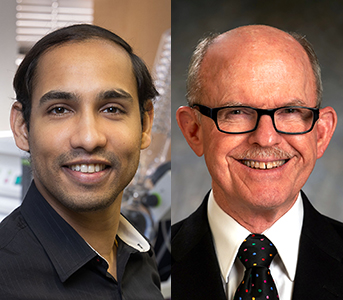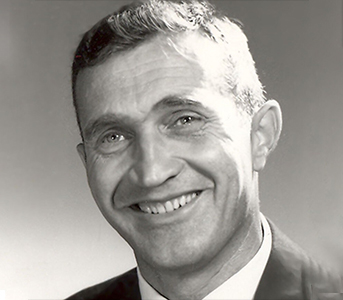
We are sad to report the passing of distinguished alumnus Stanley M. Gartler, who died on May 25, 2026, at the age of 102. A pioneering geneticist, Gartler made groundbreaking discoveries that transformed the fields of human genetics and cancer biology.
Although Gartler is best known for demonstrating that many widely used human cell lines had been contaminated by HeLa cells – a finding that transformed biomedical research – his scientific journey began at UCLA.
According to university records, Gartler attended UCLA from 1940 to 1942, completing foundational chemistry coursework before earning a Bachelor of Science in Agriculture in 1948. During his studies, he took Chemistry 1A, 1B, 1C, 6A (Quantitative Analysis), and 8 (Organic Chemistry), courses taught by some of UCLA’s most influential chemists, including Saul Winstein, Theodore “Ted” Geissman, and William G. Young. Reflecting on Gartler’s coursework, Distinguished Professor Steven Clarke remarked, “Looks like he was taught by the best!” Their pioneering work helped establish UCLA’s growing reputation as a center for excellence in chemistry and undoubtedly provided Gartler with a rigorous scientific foundation.
After graduating from UCLA, Gartler went on to build an extraordinary career in human genetics. As a faculty member at the University of Washington, he made one of the most consequential discoveries in modern cell biology. In 1966, he presented evidence that numerous supposedly independent human cell lines were, in fact, contaminated by the fast-growing HeLa cell line derived from Henrietta Lacks. His findings were initially met with skepticism but were ultimately confirmed, leading researchers around the world to adopt more stringent methods for authenticating cell lines. Today, cell line authentication is considered an essential practice in biomedical research, helping to ensure the reliability and reproducibility of scientific discoveries.
Ironically, HeLa cells themselves have become one of the most important tools in biomedical research. Today, researchers across UCLA – including faculty in the Department of Chemistry & Biochemistry – continue to use authenticated HeLa cell lines to investigate fundamental questions in cell biology, genetics, biochemistry, and human disease. Gartler’s work did not diminish the value of HeLa cells; instead, it ensured that scientists could use them with greater confidence and interpret their results accurately.
Gartler’s research extended well beyond cell line authentication. Throughout his career, he made pioneering contributions to human genetics, gene expression, and X-chromosome inactivation, earning widespread recognition for his scientific insight and commitment to rigorous research.
His accomplishments reflect the enduring impact of a strong scientific education. During the early 1940s, UCLA’s chemistry program was already attracting exceptional faculty who would go on to become internationally recognized leaders in organic chemistry and chemical education. Learning from these pioneering scientists gave Gartler an exceptional introduction to scientific inquiry—one that would shape a career defined by careful experimentation, intellectual curiosity, and a willingness to challenge accepted assumptions.
Gartler’s legacy serves as a reminder that the foundations built in the classroom can lead to discoveries that change the course of scientific research for generations.
Penny Jennings, UCLA Department of Chemistry & Biochemistry, penjen@g.ucla.edu.