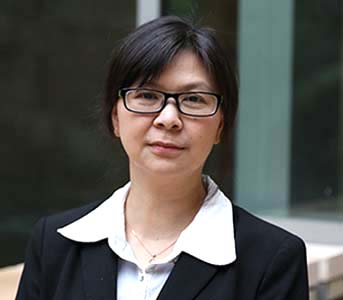
The department welcomes talented theoretical chemist Thomas Fay, who joined the UCLA faculty as an Assistant Professor on July 1, 2025.
“We are excited to welcome Thomas Fay to UCLA,” said Professor Miguel García-Garibay, UCLA’s Dean of Physical Sciences. “As a new assistant professor, he brings a distinctive perspective and strong foundation in theoretical and computational chemistry. His research will open new frontiers in our understanding of quantum effects in complex molecular systems, and we are excited to support him as he launches his independent group and contributes to teaching in our vibrant academic community.”
Before joining the UCLA faculty as an Assistant Professor, Fay worked as a postdoctoral researcher at Aix-Marseille Université (2024–2025) and, prior to that, at UC Berkeley (2021–2024), following the completion of his Ph.D. at the University of Oxford (2017–2021).
Deepening our understanding of quantum effects in chemistry is essential to many processes essential to life, and how to harness these effects to control chemical processes. When electrons in molecules absorb energy from light, or when they transfer from one molecule to another, the simple picture of electrons forming a “glue” bonding atomic nuclei together with the nuclei obeying Newton’s laws of motion forces breaks down. Instead the equations of quantum mechanics govern this type of chemistry, which gives rise to many unexpected effects, but the complexity of quantum mechanics also presents new challenges to theoretical chemists.
At UCLA, research in the Fay Group will focus on developing theoretical and computational tools to understand the quantum dynamics of light-induced processes in molecules and materials. The group will explore a fascinating range of quantum phenomena related to electron and energy transfer in chemical systems, including biological photosynthesis and photocatalysis. Research will also investigate the enigmatic relationship between molecular chirality and electron spin—and how this interplay can be harnessed for applications ranging from quantum information science to enantioselective catalysis. Understanding these phenomena, particularly in complex chemical systems where thousands of atoms and electrons are interacting simultaneously, will be tackled with a combination of pen and paper theory and developments of new computational methods and software to construct in silico models of experiments.
Fay is excited to contribute to teaching at UCLA at both the undergraduate and graduate levels. With research interests that span quantum mechanics, statistical mechanics, chemical kinetics and spectroscopy, and with several years of teaching experience as a lecturer at various colleges of the University of Oxford, he is well-equipped for and looks forward to the challenge of training the next generation of chemistry students in these fascinating topics.
“His work has consistently deepened the understanding of complex quantum mechanical phenomena, particularly as they relate to chemical reactions, spin dynamics, and energy transfer in both natural and engineered systems” said Professor Daniel Neuhauser, the head of the Physical and Theoretical search committee.
Fay can be followed on social media at BlueSky: @tompfay.bsky.social.
Penny Jennings, UCLA Department of Chemistry & Biochemistry, penjen@g.ucla.edu.