Distinguished Professor Sarah Tolbert, the Charles and Carolyn Knobler Endowed Term Chair, has been selected for one of UCLA’s highest teaching honors, the 2026 Distinguished Teaching Award for Senate Faculty for Community-Engaged Teaching, in recognition of her more than 25 years of dedicated leadership of the California NanoSystems Institute (CNSI) Nanoscience Education Program and her lasting impact on science education and outreach.
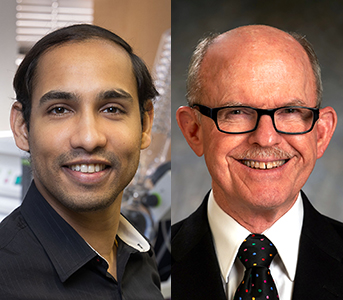
Tolbert is one of six campuswide Academic Senate-represented recipients chosen by the UCLA Academic Senate Committee on Teaching for the award, which recognizes academically and professionally accomplished individuals who bring respect and admiration to the scholarship of teaching. Professor Jorge Torres also received a Distinguished Teaching Award this year.
Senate and non-Senate faculty awardees were nominated in one of four categories: Practice of Teaching, Innovation and Impact, Community-Engaged Teaching, and Undergraduate Mentorship. Recipients were selected based on nominations from colleagues, campus leaders, and students, and will be recognized by the UCLA Center for the Advancement of Teaching at the annual Andrea L. Rich Night to Honor Teaching event in fall 2026.
In her role as director of the California NanoSystems Institute (CNSI) Nanoscience Education Program since the institute’s founding in 2000, Tolbert has exemplified the spirit of community-engaged teaching. She has helped develop all aspects of the program, which began as an effort to bring cutting-edge nanoscience education to students through free, hands-on workshops for Los Angeles-area high school teachers. Over the years, the program expanded to include workshops for middle and elementary school teachers, public science education initiatives through participation in science fairs and school events, summer programs for high school students, and entrepreneurship events.
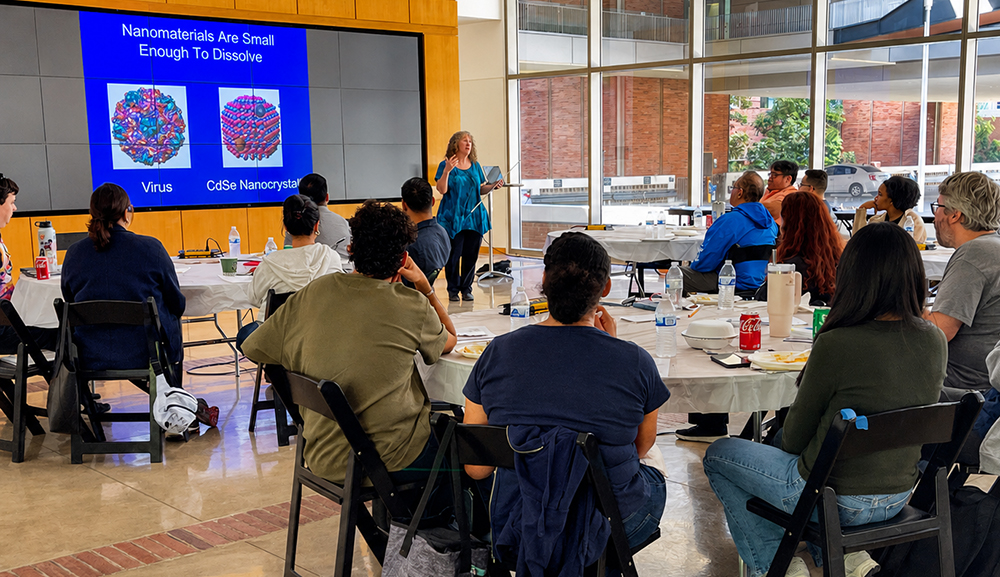
Through these programs, Tolbert reaches hundreds of teachers and students each year, expanding access to science education and creating opportunities for learners from underserved communities. The programs are open to any student or teacher from any school who wishes to participate, but the majority of participating teachers come from low-income public schools.
“Sarah’s impact on science education at UCLA has been extraordinary,” says Dr. Rita Blaik, CNSI’s Education Director. “Through the CNSI Education programs, she has inspired generations of graduate students, empowered K-12 teachers, and created meaningful opportunities for learners from all backgrounds to engage with science in creative and accessible ways. This recognition reflects not only her dedication to teaching, but also her commitment to community engagement and building the next generation of scientific talent.”
Over the years, the program has tried many ways to show people the excitement of nanoscience and to help make scientific discovery more accessible. For example, “Nanoscience at the Mall” was a public outreach initiative designed to engage community members with hands-on science activities during their weekend shopping adventures. For a number of years, the program presented content in both English and Spanish as the Univision Feria de Educación.
Expanding the program beyond high school education to include middle and elementary school teachers was a particularly important change, according to Tolbert, as elementary and middle school teachers have more freedom to integrate new activities into their curriculum, and those younger ages are the time when most students decide whether they consider themselves to be a science-focused student.
Finally, summer programs for high school students offered through UCLA Chemistry summer courses gave students from around the globe a chance to participate in nanoscience experiments. The program’s most recent expansion is an initiative that helps middle and high school students explore technology entrepreneurship through CNSI’s annual Education Nanovation virtual product development competition.
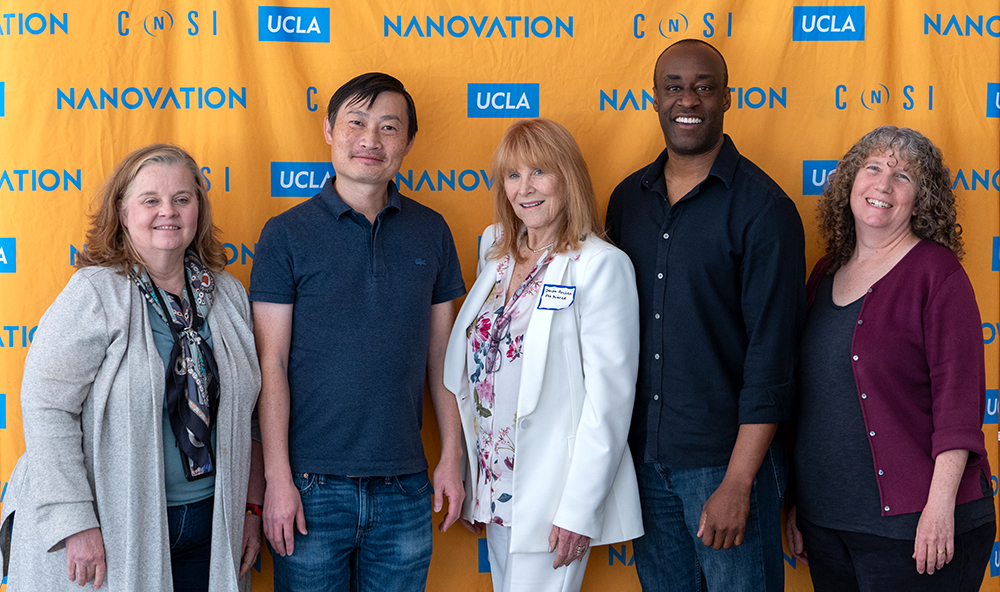
Tolbert’s work with the program has also provided outstanding opportunities for UCLA graduate students and postdoctoral scholars to gain experience in public science education. Students involved in the Nanoscience Education Program help develop classroom modules, lead teacher workshops, and design creative approaches for making complex scientific concepts accessible to broader audiences. Teaching assistants in the program have received both departmental and university-level teaching awards and have gone on to a wide range of careers in science education. Graduate students often use this work as a foundation for fellowship applications and speak enthusiastically about the opportunity to utilize their scientific expertise for community engagement.
Tolbert has been a member of the UCLA faculty since 1997 and holds joint appointments in the Departments of Chemistry and Biochemistry, and Materials Science and Engineering. She is an internationally renowned materials chemist whose research spans a range of interdisciplinary areas, from battery systems to the design of ultrahard materials, and is recognized for its breadth, impact, and scholarly excellence.
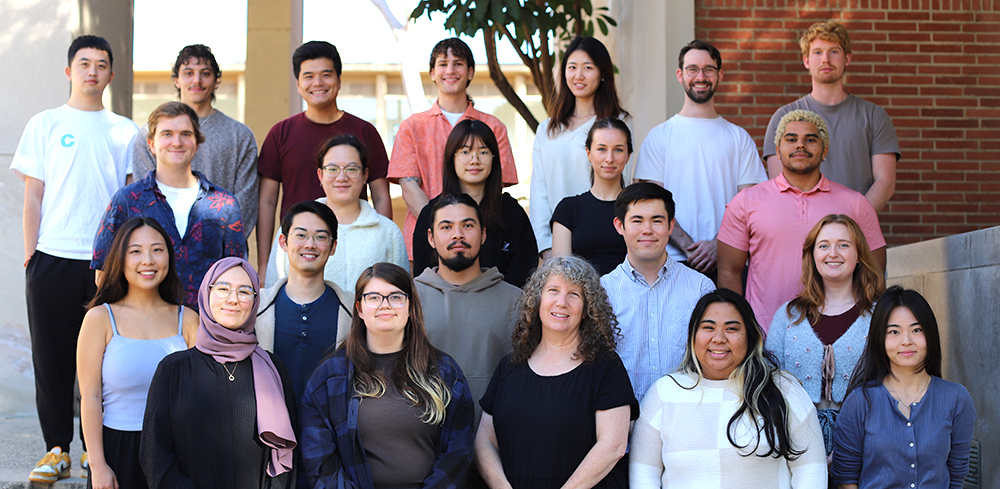
Research in the Tolbert group focuses on using solution-phase and solid-state methods to control the structure of materials across length scales—from the atomic to the nanometer scale—and then using that structural control to tune the physical properties of materials for a broad range of applications. Her work spans many areas, including materials for electrochemical energy storage, plastic electronics, magnetic and multiferroic materials, and ultra-hard or low thermal conductivity materials. Tolbert group projects involve an intimate blend of materials synthesis, device physics, and fundamental physical chemistry, making them truly interdisciplinary efforts.
Tolbert currently leads the DOE-funded Center for Strain Optimization for Renewable Energy (STORE), which aims to make sodium-ion batteries a marketable commodity.
Her many honors include the 2023 Henry H. Storch Award for Energy Chemistry from the American Chemical Society, the 2023 Tolman Medal from the Southern California Section of the American Chemical Society, Fellow of the Royal Society of Chemistry, and UCLA’s 2019 Community Service and Praxis Diversity, Equity, and Inclusion Award.
Penny Jennings, UCLA Department of Chemistry & Biochemistry, penjen@g.ucla.edu.