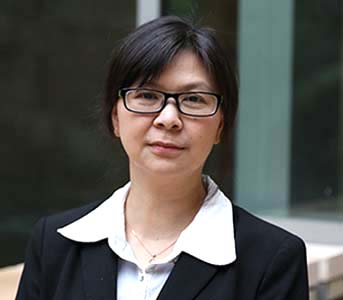
The department welcomes world-class computational chemical biologist Professor Steffen Lindert, who joined the UCLA faculty as an Associate Professor on July 1, 2025.
“It is a distinct pleasure to welcome Steffen Lindert to UCLA and the Department of Chemistry and Biochemistry,” said Professor Miguel García-Garibay, UCLA’s Dean of Physical Sciences. “Steffen is a world-class researcher and leader in computational methods development and applications related to integrative structure biology. His ability to effectively collaborate with a wide range of scientists will accelerate growth of drug discovery and translational research at UCLA.”
Prior to joining the Department of Chemistry & Biochemistry, Lindert was a professor of chemistry and biochemistry at Ohio State University. He is transitioning the Lindert Group to UCLA, where his team will continue to focus on the development and application of computational techniques for modeling biological systems, with the goal of gaining a deeper understanding of biomolecular processes, predicting protein structure with the use of sparse experimental data, engineering proteins, and discovering new drugs.

Search Committee Chair Professor Joseph Loo is especially enthusiastic about having Lindert join the UCLA faculty. “Dr. Lindert’s research stands out by developing computational methods to merge experimental data collected by different mass spectrometry strategies with other biophysical data and calculations to propose viable protein structural models. His efforts here are potentially impactful and significant to the structure biology field. I look forward to collaborating with his group.”
UCLA’s strength in structural biology and computational biology is greatly enhanced by Lindert joining the department. Given his lab’s history of collaborating with research groups around the world, many biophysics and biochemistry labs at UCLA will likely interact closely with him and his group. In addition, Lindert has already established collaborative ties in medicinal chemistry and drug discovery, which could further support the growth of translational research at UCLA.
Elucidating protein structure is fundamental to understanding and manipulating protein function. Detailed knowledge of protein structure provides deeper insight into biological processes and, when combined with advanced computational techniques, creates exciting opportunities in structure-based drug development and protein design.

The Lindert Lab develops and applies computational methods to accurately determine protein structures in various contexts, design protein functions, and create selective drug interventions for disease. Specifically, they aim to improve our understanding of protein structures in cellular environments, enhance the efficiency of drug screening protocols, and identify effective treatment leads for heart failure.
Their research integrates machine learning and AI, physics-based, and knowledge-based approaches, combining elements of physical chemistry, biochemistry, and biophysics.
At UCLA, Lindert is excited to teach both introductory and advanced level courses. His scientific interests align well with teaching not only core classes for our undergraduate Biochemistry students, but also graduate-level courses related to structural biology. He is also well-positioned to develop new courses in computational structural biology or computer-aided drug discovery. “Dr. Lindert has the potential to be an outstanding contributor to our teaching mission,” Loo said.
Lindert received his M.Sc. in Physics from the University of Leipzig in 2006 and his Ph.D. in Chemical and Physical Biology (Molecular Biophysics track) from Vanderbilt University in 2011. Co-advised by Professors Jens Meiler and Phoebe Stewart, he worked on a combined experimental and computational project developing a program – EM-Fold – which folds proteins into medium resolution cryo-electron microscopy density maps. After finishing his Ph.D., he joined the laboratory of Professor Andy McCammon at the University of California, San Diego, as a postdoctoral fellow. His research focused on macromolecular simulations of proteins involved in cardiomyocyte contraction and computer-aided drug discovery. Lindert was awarded a prestigious postdoctoral fellowship from the American Heart Association. He started his research group at Ohio State University in August of 2015.
Lindert’s many honors and awards include the OSU College of Arts and Sciences Mid-Career Faculty Excellence Award (2024), Ohio State University Scarlet and Gray Associate Professor Award (2023), Sloan Research Fellow, Alfred P. Sloan Foundation (2020), ACS OpenEye Outstanding Junior Faculty Award in Computational Chemistry (2019), Ohio State University Elizabeth L. Gross Award for Faculty Excellence (2019). The Lindert lab is funded by the NIH, NSF and DoD.
Lindert can be followed on social media at X/Twitter: @LindertLab.
Penny Jennings, UCLA Department of Chemistry & Biochemistry, penjen@g.ucla.edu.