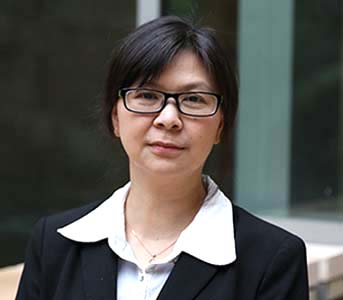
Victoria Barber receives American Lung Association Indoor Air Award Grant
Professor Victoria “Tori” Barber has been awarded an Indoor Air Research Award Grant from the American Lung Association.
Barber received the grant for her research project titled “Evaluating Health Effects of Re-emitted Smoke Volatile Organic Compounds,” which provides $100,000 per year for three years.
During a wildfire, smoke leaks into buildings and impacts air quality. Smoke is a mixture of components, including volatile organic compounds (VOCs), which are responsible for the smell of smoke. Indoor materials act like sponges for VOCs; VOCs stored in these materials can leak out into the indoor air over time. This is why smoky smells can persist for so long in indoor environments. Inhaling VOCs is associated with lung health problems, so the persistence of smoke VOCs in indoor air is a major health concern.
For her project, Barber and a collaborative team of UCLA researchers including Dr. Brigitte Gomperts (David Geffen School of Medicine) and Prof. Mehdi Bouhaddou (UCLA Microbiology, Immunology, and Molecular Genetics) will conduct controlled laboratory experiments exposing common household materials to laboratory-generated smoke and measuring the types and amounts of VOCs that are absorbed and reemitted from these materials. Next, they will expose cultured human airway cells to these VOCs to examine how exposure impacts airway health. Finally, they will test surface cleaning approaches to reduce concentrations of smoke VOCs in indoor air and their associated health risks.
Barber joined the UCLA faculty as Assistant Professor of chemistry and biochemistry in July 2023. Her research group, based in the UCLA Department of Chemistry & Biochemistry and affiliated with the Department of Atmospheric and Oceanic Sciences, studies the fundamental physical and chemical processes that govern the evolution of reactive organic carbon in the atmosphere. Although organic compounds occur in trace amounts, they strongly influence air composition, air quality, and climate through photochemical oxidation and partitioning processes that affect pollutant lifetimes, radical cycling, ozone formation, and organic aerosol production. Using mass spectrometry, spectroscopy, and computational tools, the group develops a molecular-level understanding of atmospheric organic chemistry and connects these insights to large-scale environmental impacts.
In addition to her group’s research, Barber is part of a multidisciplinary team at UCLA that is working with the L.A. County Fire Department to isolate the contaminants on the clothing of firefighters and assess their effects on human cells. The study will help determine if personal protective equipment (PPE) contributes to firefighters’ cancer risk.
Penny Jennings, UCLA Department of Chemistry & Biochemistry, penjen@g.ucla.edu.