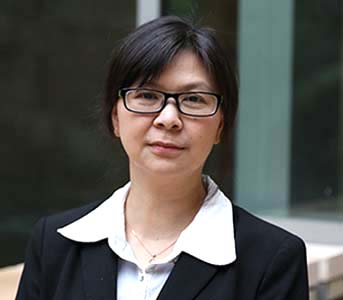
The David and Lucile Packard Foundation has selected Professor Soumitra Athavale as one of 20 recipients of the 2026 Packard Fellowships for Science and Engineering.
Recognized as one of the nation’s most innovative early-career scientists and engineers, each Fellow receives $985,834 in flexible funding over five years, empowering researchers to take bold risks in science and engineering.
Athavale joined the UCLA faculty in 2023 as an assistant professor of chemistry and biochemistry and was named the John D. and Edith M. Roberts Term Chair in Organic Chemistry in 2026. By combining synthetic organic chemistry with directed evolution, the Athavale group designs novel proteins and unprecedented iron enzymes to address major chemical and biological challenges, aiming to outperform and replace precious-metal catalysts.
His honors include selection for Chemical & Engineering News’s 2026 Talented 12, the UCLA Chemistry & Biochemistry 2026 Herbert Newby McCoy Award for contributions to chemistry and biochemistry, and a 2026 National Institutes of Health Maximizing Investigators’ Research Award. In June 2026, Athavale received W. M. Keck Foundation bridge funding, alongside chemistry graduate student Justin Manoff, to advance research on new-to-nature biocatalysis for sustainable hydrogenation.
Athavale is the sixth UCLA Chemistry & Biochemistry faculty member to receive a Packard Fellowship. Professors Richard Kaner (1989), Yi Tang (2007), Hosea Nelson (2017, now at Caltech), Jose Rodriguez (2019), and Keriann Backus (2020) also received this honor.
From the David & Lucile Packard Foundation Press Release:

The David and Lucile Packard Foundation Announces the 2026 Class of Packard Fellows for Science and Engineering
The David and Lucile Packard Foundation announced today the recipients of the 2026 Packard Fellowships for Science and Engineering. This year’s class features 20 early-career scientists, mathematicians, and engineers, who will each receive $985,834 in unrestricted funds over five years to pursue their research. Their research is shaping our understanding of the world from how parasites navigate the human body, how to develop more affordable ways to store renewable energy, to whether the world’s most biodiverse forests can evolve fast enough to survive a warming climate.
“These scientists, engineers, and mathematicians are asking ambitious questions about our bodies, our planet, and the technologies shaping our future,” said Nancy Lindborg, President and CEO of the Packard Foundation. “At a time of significant uncertainty in the research landscape, flexible, long-term support for early-career researchers matters more than ever.”
Since 1988, the Packard Fellowships for Science and Engineering have supported transformative work by providing unrestricted funds, giving Fellows the freedom to follow the science wherever it leads. Fellows decide what their research needs, whether that is new equipment, another researcher on the team, travel to a conference, or child care during the demanding early years of running a lab. That flexibility lets Fellows test novel ideas, follow unexpected findings, and lead research that drives real-world impact.
The Foundation expanded its support for Fellows this year, announcing an additional increase in Fellowship awards beginning with the 2027 class, providing Fellows with greater support to pursue their research. Earlier in 2026, the Foundation also created the Packard Fellows Emergency Relief Fund, a $3.3 million rapid-response effort administered by the Science Philanthropy Alliance that helped 42 Fellows sustain their research teams through disruptions in federal funding.
The Fellowships were inspired by David Packard’s passion for science and engineering and his commitment to strengthening university-based research in the United States. Recognizing that the success of the Hewlett-Packard Company, which he co-founded, grew from breakthroughs in university labs, the Foundation launched the program 38 years ago. Since then, the Packard Foundation has awarded more than $550 million to support 755 scientists and engineers from 55 universities.
“What is exciting about supporting researchers at this early stage of their career is that some of their most important discoveries are impossible to anticipate,” said Richard Alley, chair of the Packard Fellowships for Science and Engineering Advisory Panel. “This year’s Fellows combine deep expertise with the curiosity and ambition to take their fields into entirely new directions.”
Over nearly four decades, Packard Fellows have advanced scientific understanding across disciplines, from fundamental discoveries about the natural world to advances in medicine and technologies that have become part of daily life. Fellows have gone on to receive many of the field’s highest honors, including Nobel Prizes in Chemistry and Physics, Fields Medals, Alan T. Waterman Awards, Breakthrough Prizes, Kavli Prizes, and elections to the National Academies of Science, Engineering, and Medicine.
Each year, the Foundation invites 50 universities to nominate two faculty members for consideration. The Packard Fellowships Advisory Panel, a group of 12 internationally recognized scientists and engineers, evaluates the nominations and recommends Fellows for approval by the Packard Foundation Board of Trustees.
The recipients of the 2026 Packard Fellowships for Science and Engineering are:
Christopher Anderson
Department of Materials Science and Engineering, University of Illinois, Urbana-Champaign
Discipline: Materials Science, Nanotechnology
Anderson’s group discovers and engineers materials that unlock new ways to control light and quantum information. From single photons, electrons, and nuclei to quantum phase transitions, they probe the physics that informs materials design. Anderson’s group translates these discoveries into devices that interconnect quantum computers, protect qubits from noise, and enable powerful sensors. Broadly, they push the limits of energy and information control for emerging technologies and to advance the frontiers of science.
Soumitra Athavale
Department of Chemistry and Biochemistry, University of California, Los Angeles
Discipline: Chemistry
The Athavale group engineers and designs new proteins and enzymes to address long-standing challenges in chemistry and biology. They combine synthetic organic chemistry with directed evolution to create new-to-nature biocatalysts capable of performing challenging chemical transformations. A central focus is the evolution of unprecedented iron enzymes with the potential to outperform and replace precious-metal catalysts in some of the most important reactions in organic chemistry.
Andrea Bajcsy
Robotics Institute, Carnegie Mellon University
Discipline: Computer Science/ Information Sciences
AI safety is a mainstream concern as generative models reach millions—but what does AI safety mean when it becomes embodied? For embodied AI, safety is more than avoiding collisions: it means understanding context (cracking eggs is ok when cooking, not in transit), sensing properties like heat or fragility, and handling uncertainty and misuse. Bajcsy’s research hypothesizes that embodied AI systems can only generate nuanced safety behaviors if they have equally nuanced representations of the world.
Kurtis Carsch
Department of Chemistry, University of Texas at Austin
Discipline: Chemistry
Carsch’s group synthesizes small molecules and materials for chemical separations and synthesis. Specifically, they synthesize porous materials that store, separate, and deploy isotopologues for nuclear energy and pharmaceuticals; design microporous materials that are processable as liquids, membranes, and composites; and isolate low-coordinate, high-valent, and metalloradical transition metal complexes to activate strong C–H bonds.
Liam Connor
Department of Department of Astronomy, Harvard University
Discipline: Astronomy, Astrophysics, Cosmology
Connor is an astrophysicist and radio astronomer working on Fast Radio Bursts. These are mysterious pulses of radio waves that come from galaxies billions of light years beyond the Milky Way. In addition to the enigma of their physical origin, Fast Radio Bursts can be used as a cosmic beacon, probing matter that is otherwise invisible. To understand these sources and apply them to cosmology, Connor’s lab builds radio telescope arrays comprised of many small antennas, acting as a single phased array.
Henri Drake
Department of Earth System Science, University of California, Irvine
Discipline: Geosciences
Small changes in Earth’s climate can trigger surprisingly large responses in the ocean and ice sheets, with major implications for coastal sea level change. The Drake lab uses physics-based computational models to improve understanding of these interacting systems and advance their prediction.
Kareem El-Badry
Division of Physics, Mathematics, and Astronomy, California Institute of Technology
Discipline: Astronomy, Astrophysics, Cosmology
The Milky Way is teeming with black holes: generations of massive stars are thought to have left about 100 million scattered across the Galaxy. Yet black holes are hard to find, so we know little about most of them. Using large-scale surveys and targeted spectroscopy, El-Badry measures stellar motions to detect these hidden objects through their gravitational influence on companion stars. This work is already revealing surprising systems that challenge standard models of binary evolution.
Moisés Expósito-Alonso
Department of Integrative Biology, University of California, Berkeley
Discipline: Ecology, Evolutionary Biology
Can hyper diverse tropical rainforests evolve fast enough to survive climate change? They hold over 60% of plant biodiversity and 20% of terrestrial carbon, but their trees cannot migrate from warming. This research new temporal genomic approaches developed in model systems to neotropical trees, to study contemporary evolution by measuring natural selection and drift in their genomes, finding genes underlying climate tolerances, and quantify genetic diversity already lost to deforestation.
Youhong (Nancy) Guo
Department of Applied Physical Sciences, University of North Carolina, Chapel Hill
Discipline: Engineering- Chemical or Biological
Chemical separations, including water purification, carbon capture, and critical mineral recovery, are essential to modern society but remain energy-intensive and inefficient. Guo’s research program aims to transform these processes by developing structured polymeric materials that harness renewable electricity, sunlight, or waste heat. By linking molecular interactions to multiscale transport, we will establish low-cost, scalable platforms for energy-efficient separations and decarbonization.
John Hickey
Department of Biomedical Engineering, Duke University
Discipline: Engineering- Chemical or Biological
Cells do not act alone: they communicate, organize, and make collective decisions that shape whether tissues heal, fight disease, or fail. Hickey’s lab develops new imaging, engineering, and computational tools to reveal the rules behind this cellular teamwork. Our goal is to move from simply mapping tissues to predicting—and eventually guiding—how they respond in healthy, cancer, and other diseases.
Christina Hueschen
Department of Cell and Developmental Biology, University of California, San Diego
Discipline: Biological Sciences
Parasites are extraordinary physical machines. Toxoplasma rockets across a human cell before pivoting to force its way inside; Schistosoma threads lung capillaries one-third its width. Hueschen’s lab will decode parasite navigation at three scales: breaching cell membranes, crossing vascular barriers, and morphing to navigate organs. They seek to uncover design rules for synthetic systems that navigate the human body and to identify vulnerabilities in parasites that claim half a million lives yearly.
Shari Liu
Department of Psychological and Brain Sciences, Johns Hopkins University
Discipline: Neuroscience
The human brain contains specialized systems for representing number, space, objects, and other minds. Yet we combine them effortlessly: we can represent a place as the target of another person’s desire, or an object as a constraint on what they can do. Liu’s lab studies how these systems are organized, how they work together, and how they emerge in development, using a toolkit spanning human neuroscience, studies of infants and children, and computational modeling.
Tyler Mefford
Department of Chemical Engineering, University of California, Santa Barbara
Discipline: Engineering- Chemical or Biological
Renewables are the cheapest source of new electricity, promising clean, abundant energy for the world’s growing population. Yet the sun sets, the wind varies, and seasons shift supply away from demand. Mefford’s work addresses this intermittency by developing electrochemical methods to reversibly store hydrogen in low-cost liquid organic molecules, enabling affordable seasonal storage. To do this, Mefford’s lab is developing the catalysts, methods, and theory to understand and optimize reactivity.
Noah Mitchell
Department of Molecular Genetics & Cell Biology, University of Chicago
Discipline: Biological Sciences
Developing tissues reliably build precise 3D organs despite stochasticity in molecular signals and cell behaviors. Mitchell’s lab asks how physical forces generated by cells—pushes, pulls, and torques—act as an error-correcting layer to stabilize organ shape as it forms. By integrating genetics with computational microscopy and mathematical modeling, we seek principles for how tissue mechanics links genes to 3D geometry, and how morphogenetic robustness breaks down under environmental stress.
Sarah Peluse
Department of Mathematics, Stanford University
Discipline: Mathematics
Peluse works primarily in additive combinatorics and analytic number theory, though several of Peluse’s past and current projects have intersections with related fields, including extremal combinatorics, design theory, representation theory, algebraic geometry, harmonic analysis, and ergodic theory. The central theme of Peluse’s research is to understand how local restrictions on the behavior of sets of numbers or points in space restricts their global behavior.
Jose Roque
Department of Chemistry, Princeton University
Discipline: Chemistry
Catalysis underpins modern manufacturing, but many catalytic processes still rely on transition metals, raising cost, scarcity, toxicity, and environmental concerns. The Roque group addresses this challenge by rethinking which elements society uses to make the molecules and materials essential for modern life. They combine synthetic chemistry, inorganic chemistry, and photochemistry to turn silicon, Earth’s second most abundant element, into a new platform for sustainable catalysis.
Jessica Stark
Department of Biological Engineering, Massachusetts Institute of Technology
Discipline: Engineering- Chemical or Biological
Sugars called glycans coat the surfaces of every cell in our bodies and are important regulators of our immune systems. However, glycan biology remains incompletely understood and its potential to improve human health is largely untapped. The goals of Stark’s research program are to understand how glycans control immune responses and to harness this biology to engineer immunity to disease. Stark’s work promises to result in new ways to diagnose and treat conditions like cancer, autoimmunity, and allergies.
Nathanan Tantivasadakarn
C.N. Yang Institute for Theoretical Physics, Stony Brook University
Discipline: Physics
Tantivasadakarn’s research explores the interplay between quantum matter and quantum information. They investigate how quantum information can reveal the structure and entanglement of quantum matter. At the same time, Tantivasadakarn uses physical principles such as symmetry to develop new approaches to fault-tolerant quantum computation. By linking fundamental theory with emerging quantum hardware, they aim to advance our understanding of quantum many-body systems while developing principles for scalable quantum technologies.
Yonglong Xie
Department of Physics and Astronomy, Rice University
Discipline: Physics
The vacuum, the closest thing nature offers to true emptiness, is not empty at all. Quantum mechanics reveals that even perfect vacuum teems with restless electromagnetic fluctuations that can alter the identity of matter itself. The Xie lab develops new microscopy tools to visualize how matter is transformed by the quantum vacuum with the goal of formulating design rules for creating vacuum-enabled phases of matter that have never existed before.
Kenji Yasuda
School of Applied and Engineering Physics, Cornell University
Discipline: Physics
Yasuda’s group studies van der Waals heterostructures, stacks of atomically thin materials that host emergent quantum phenomena at their interfaces. A central focus is slidetronics: using interlayer sliding of layered materials to reshape atomic arrangements and control electronic properties. They investigate how sliding can be coupled to ferroelectricity, magnetism, and superconductivity, linking atomic motion and electronic states to fast, energy-efficient memory and reconfigurable electronics.