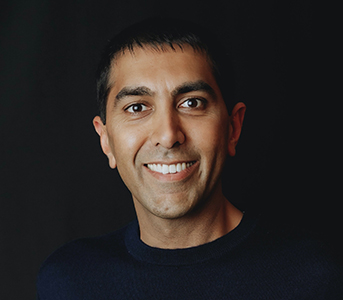
Chemical & Engineering News (C&EN) includes Professor Soumitra Athavale in its annual Talented 12 feature, highlighting young investigators who are doing groundbreaking work in the field.
The Talented Twelve list, created by the weekly magazine of the American Chemical Society, recognizes Athavale for “forging next-generation iron biocatalysts.”
“This year we had to select the Talented 12 from our largest pool of submissions – nearly 540 nominations – since we started this initiative. I am thrilled with the cohort we have selected. Each of them demonstrates exceptional quality in their work and extraordinary ambition for the impact of their research,” said Nick Ishmael-Perkins, C&EN Global Editor-in-Chief.
Athavale is the fifth faculty member to be named to C&EN’s Talented Twelve list: Professor Hosea Nelson received the honor in 2015 (when he was a faculty member at UCLA; he is now a faculty member at the California Institute of Technology), Professor Alex Spokoyny in 2016, Professor Jose Rodriguez in 2018, and Professor Osvaldo Gutierrez in 2020 (before joining the UCLA faculty).
Alumni who have received the honor include Professor Luis Campos, Ph.D. ’06 (Columbia University) in 2016; Dr. Tina Li, ’06 (Cabot Microelectronics Corporation) in 2019; Dr. Maher El-Kady, Ph.D. ’13 (UCLA and Nanotech Energy) in 2022; Dr. Jesus Moreno, Ph.D. ’17 (Bristol Myers Squibb) in 2024; Professor Nako Nakatsuka, Ph.D. ’17 (Swiss Federal Institute of Technology, Lausanne), also in 2024; and Professor Tejas Shah, Ph.D. ’16 (Corteva Agriscience) in 2025.
From Chemical & Engineering News (by Bethany Halford):
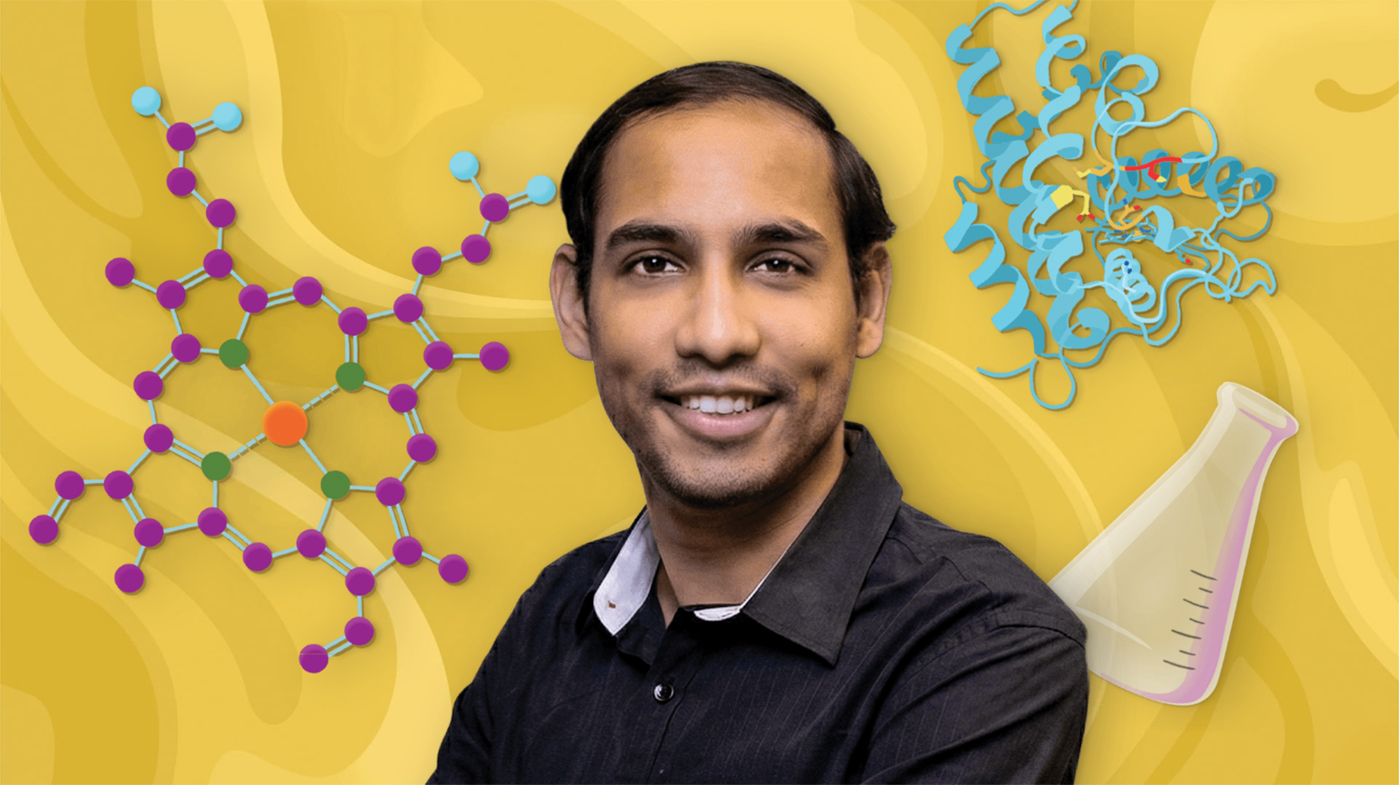
Soumitra Athavale
Forging next-generation iron biocatalysts
Vitals
Current affiliation: University of California, Los Angeles
Age:35
PhD alma mater:University of Illinois Urbana-Champaign
If I were an element, I’d be: “Iron. It is the most versatile metal in the universe and one that has made life possible on earth.”
My favorite movie is: “Too many to list, but for a nonscientific pick, I will go for the Bollywood movie Lagaan—a terrific mix of fiction, history, sport, incredible music which reminds me of India.”
Soumitra Athavale doesn’t have Tony Stark’s high-tech, high-flying suit of armor, but it’s still tempting to call him Iron Man. That’s because Athavale is engineering iron-containing enzymes to do chemistry they’ve never done before. His work could change the way drugs are made by using sustainable and environmentally friendly systems to replace ones that use precious metals, compressed gases, and specialized ligands.
Athavale and his team at the University of California, Los Angeles, did heroic work in this area last year, when they used enzyme screening and directed evolution to create an iron-bearing heme enzyme that can asymmetrically hydrogenate unactivated alkenes on gram scale via radical hydrogenation. Hydrogenating unactivated alkenes is a common transformation in synthetic organic chemistry, but it’s typically done with hydrogen gas and precious metal catalysts.
“For pharmaceutical process-scale chemistry, I’m absolutely sure that at one point or another, our enzymes will replace some iridium or palladium catalyst,” Athavale says. And he thinks the methodology can expand to other reactions too. Ultimately, he says, his goal is to harness biological molecules like proteins and enzymes to solve chemical and biological problems.
Athavale wasn’t always part of the MCU (short for metalloenzyme catalysis universe). Growing up in Pune, India, Athavale thought he would study mathematics. But when he read Robert T. Morrison and Robert N. Boyd’s classic textbook Organic Chemistry as a teenager, it appealed to his mathematical nature. “The fact that you can have unifying rules among this extremely huge empirical observation dataset—I felt that there was some method to the madness, and I was really drawn to that,” he says.
Athavale graduated with dual bachelor’s degrees in chemistry and biology from the Indian Institute of Science Education and Research Pune in 2013. The following year he moved halfway around the world to attend the University of Illinois Urbana-Champaign. He enrolled in the school’s molecular and cellular biology PhD program, but after taking classes and doing lab rotations, he decided he wanted to pursue a hardcore organic chemistry thesis project. He started cold emailing organic chemistry professors at Illinois to see if he could move into one of their groups to study a problem that had long interested him—the mechanism of the Soai reaction, which produces alcohols with one type of stereochemistry but starts with materials that have no stereochemical influence.
One of those emails landed in the inbox of Scott E. Denmark, who agreed to meet with Athavale. “I was so blown away because he was, chapter and verse, fluent in the intricacies and the literature on the Soai reaction,” Denmark recalls of their first meeting. He agreed to mentor Athavale and even found money to fund the esoteric project.
“Students like Soumitra Athavale come along only once or twice in an academic career. He is completely self-motivated, autodidactic, and passionate about science,” Denmark says. “He has the ambition, intellect, creativity, and experimental skill to achieve great things.”
Athavale moved to the California Institute of Technology in late 2019 to do postdoctoral research with 2018 chemistry Nobel laureate Frances H. Arnold. In Arnold’s lab, he engineered enzymes that transfer nitrenes to unactivated C–H groups to make amines.
During his postdoc, Athavale also competed in Merck KGaA’s Compound Challenge, in which participants had 96 h to propose a synthesis, including experimental conditions, of a given molecule. In 2020 the target molecule was the natural product melongenaterpenes A, which has a tough-to-make spiro[4.5]decane skeleton. That year, two proposals shared the €10,000 prize money. One was from a team of 10 chemists at the Max Planck Institute for Kohlenforschung. The other was Athavale’s solo effort.
In 2023 Athavale started his independent career at UCLA, where he is the inaugural John D. and Edith M. Roberts Term Chair in Organic Chemistry. He says he’s fortunate to be studying enzymes during what he calls a golden age for protein biochemistry: directed evolution is widely used, and computational protein design is advancing at a blistering pace.
But even with technological advancement driving so much of protein biochemistry, he says his ultimate goals are simple: “I think the unifying guiding passion through all of my work is still fascination toward foundational questions in chemistry.”