From UCLA Newsroom (by Lucy Berbeo):
A $3 million commitment from physicist, entrepreneur and philanthropist Mani L. Bhaumik will allow UCLA to establish a program for recruiting postdoctoral fellows in the departments of physics and astronomy and of chemistry and biochemistry, bolstering the university’s capacity to contribute to fundamental research across these disciplines.
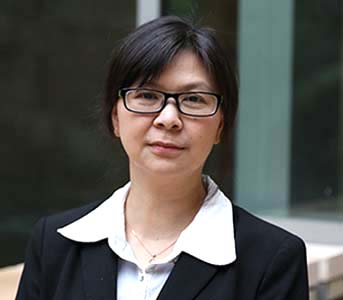
Pictured above: In 2024, as part of a ceremony at Royce Hall honoring the UCLA College’s first 100 years, Dean of Physical Sciences and Senior Dean of the UCLA College Miguel García-Garibay (left) recognized Bhaumik for his transformational leadership, advocacy and support.
The gift builds on more than a decade of support from Bhaumik to the UCLA Division of Physical Sciences, where he himself once spent time as a postdoctoral researcher. The division is matching Bhaumik’s gift, contributing an additional $1.5 million toward the new fellowship program.
“I almost grew up along with UCLA — when I came here at 28, I wasn’t that much younger than the university,” Bhaumik said. “It’s really amazing to have seen the growth of UCLA and where it is going. I’d like to be a fly on the wall for the next centennial to see what has happened — the progress so far has been unimaginable.”
Bhaumik’s rise to prominence followed a storied path. Born into poverty in a village in West Bengal, India, he excelled academically in his home country and came to UCLA on a Sloan Foundation postdoctoral fellowship. He launched his career at Northrop Grumman, where he was instrumental in developing the laser technology that led to Lasik eye surgery. A recipient of the UCLA College 100 Visionary Award, Bhaumik has been a champion of students, postdoctoral researchers and faculty alike, with his past gifts to UCLA supporting the establishment of the Mani L. Bhaumik Institute for Theoretical Physics and the Mani L. Bhaumik Centennial Collaboratory, among other initiatives.
“Few people are as driven as Mani Bhaumik to further scientific discovery by investing in the next generation of talented researchers,” said Miguel García-Garibay, dean of physical sciences and senior dean of the UCLA College. “We are tremendously grateful for his gift to establish the Bhaumik Prize Postdoctoral Fellows Program, which not only strengthens UCLA’s standing as a destination for rising scientists, but ultimately will serve to shape a better future through the contributions they will make to our academic community and to the world.”
Launching as a pilot initiative within the division of physical sciences, the program will support outstanding scholars conducting research and engaging in service activities — including in the areas of policy and science engagement with the public — in all areas of chemistry and biochemistry as well as physics and astronomy. Each year for four consecutive years, four postdoctoral fellows will be recruited and appointed for up to a three-year term. The pilot program will support a total of approximately 16 fellows over a six-year span.
“The importance of a postdoctoral fellowship program cannot be overstated. It allows us to recruit energetic, rising scholars with great potential, who will be free to come to UCLA and do their best work,” said Stuart Brown, chair of the UCLA Department of Physics and Astronomy. “We will be reaching out to departments throughout the U.S. and abroad to boost visibility, and we’re really looking forward to seeing how it evolves over time.”
The program also will support interaction across disciplines, career development opportunities, and training in intellectual property and entrepreneurship, with the goal of helping participants develop successful independent careers as principal investigators, scientific leaders, or entrepreneurs at top academic, governmental or industrial institutions.
“The best thing about all of this is that we don’t yet know what new discoveries will be made, because they will be fundamentally rooted in the work and talents of the postdocs that we will recruit,” said Alexander Spokoyny, chair of the UCLA Department of Chemistry and Biochemistry. “They will be the drivers of these innovations. That’s the most exciting aspect of working in science: you have no idea what you’re going to discover.”