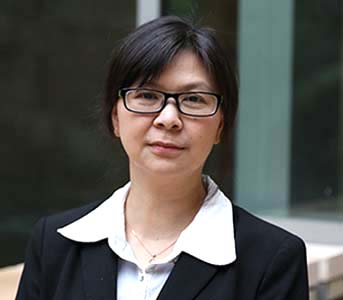
Materials chemistry graduate student Kodi Thurber (Tolbert group) has been awarded the 2025 Stanford Synchrotron Radiation Lightsource (SSRL) Scientific Development Award for his development of a novel battery cell that enables the use of synchrotron X-rays to visualize structure and volume changes in energy dense battery materials in 3D, with nanoscale resolution.

Thurber received the award at the annual SSRL/LCLS Users’ meeting in September, where he gave an plenary award talk titled “Advancing Operando Nanotomography and Resolving the Complexities of Volume Expansion in Alloy Anodes,” which focused on his research that made use of the SSRL facilities. SSRL is a U.S. Department of Energy user facility that generates powerful X-ray beams through emission from accelerated electrons, enabling scientists to study the structure of materials and molecules at the atomic level under complex environmental conditions.


The SSRL Scientific Development Award, presented annually to one recipient, recognizes outstanding research accomplishments by a new investigator—limited to undergraduate or graduate students, or postdoctoral fellows within three years of receiving their Ph.D. at the time of nomination. The award includes a $1,000 stipend to support dissemination of the results discovered at SSRL, and Thurber will also be featured in the SSRL newsletter.
Raised in San Jose, California, Thurber began his undergraduate studies at the University of San Diego (USD). While he originally planned to become a medical doctor, he was drawn to the fundamental questions of life through chemistry. Eager to begin research, he joined the lab of Professor Tammy Dwyer as a freshman, where he spent four years studying unnatural DNA base pairs using 2D NMR in the context of cancer and Alzheimer’s research. Thurber earned his bachelor’s degree in Chemistry from USD in 2021, and during his time at USD, he received both a Summer Undergraduate Research Experience Award and an Excellence in Research Award upon graduation.
Thurber then entered the Chemistry & Biochemistry graduate program at UCLA in the materials concentration, where he conducts research in Professor Sarah Tolbert’s lab. His work focuses on synthesizing nanostructured electrode materials for high-energy-density batteries, and characterizing their chemo-mechanical properties utilizing a broad range of cutting edge tools, including multiple X-ray beamlines at the Stanford Synchrotron Radiation Lightsource. He has also served as a teaching assistant and volunteered with the California NanoSystems Institute Nanoscience Education Program. Thurber’s contributions were recently recognized with a Ralph and Charlene Bauer Award for excellence in research, teaching, and service.
“My goal after graduation is to translate the research we’re doing on high-energy-density batteries into a company that can make a positive impact on the planet, but there are a lot of steps that need to happen between now and then,” Thurber said.
Event photos courtesy of Jacqueline Ramseyer Orrell/SLAC National Accelerator Laboratory.
Article by Penny Jennings, UCLA Department of Chemistry & Biochemistry, penjen@g.ucla.edu.