This year, 25 chemistry and biochemistry graduate student researchers received the 2026-2027 UCLA Graduate Division Dissertation Year Award (DYA).
The UCLA Dissertation Year Award (DYA) provides senior doctoral students with one year of support to complete their dissertation studies.
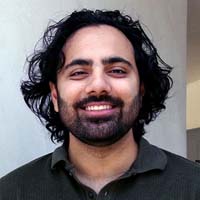
Pujan Ajmera – Theory and Computation – Alexandrova Group – Pujan’s research aims to bridge electrostatic preorganization, dynamics, and electronic structure in metalloenzymes – which can confer some of the most efficient reactivity seen in nature. He has developed approaches to analyze the dynamic, 3-dimensional electric field at enzyme active sites, and couples them with high-level electronic structure methods to see the perturbative effect of electrostatics in reactivity. He primarily applies these methods to understand how nickel and iron-containing enzymes tune charge transfer and preferential spin states.
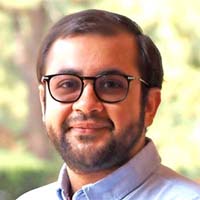
Hashim Al Khunaizi – Materials and Nanoscience – Spokoyny Group – Hashim’s research focuses on incorporating atomically precise boron clusters into functional materials to discover unique chemical and physical properties. Through the design and synthesis of boron cluster-based systems, he investigates how these molecular building blocks can enhance material performance across a range of applications. His work centers on embedding boron clusters in superhydrophobic coatings, switchable wettability surfaces, and p-type dopants for semiconductors.
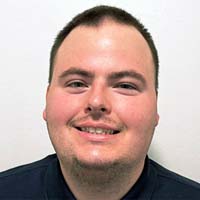
Tucker Allen – Theory and Computation – Neuhauser Group – Tucker’s research focuses on developing computational methods to study how light interacts with large molecules. Through quantum mechanical simulations, he studies electronic excitations and the interactions between excited electrons and holes after light absorption. His work centers on stochastic approaches to the many-body Bethe-Salpeter equation, with the goal of simulating challenging excitations in molecular systems that are too large for conventional electronic-structure methods.
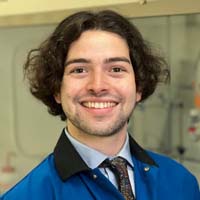
Eli Biletch – Chemical Biology – Backus Group – Eli’s work focuses on developing photosensitizer-based proximity labeling technology to reveal protein, nucleic acid, and lipid interactions in cells. Through expanding the toolbox of photocatalytic proximity labeling to diverse biomolecules, his research has discovered promising new antiviral targets for alphaviruses, key proteins involved in host-pathogen interactions for parasitic infection, and uncovered proteins with novel roles at nucleolar subregions and in nuclear speckles.
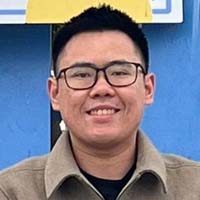
Yisi Chen – Materials and Nanoscience – Liu Group – Yisi works at the biological and electrochemical interface, modeling kinetic signal decay to understand cellular adaptation to reactive oxygen species (ROS). He investigates how cells process transient oxidative stress, mapping the precise threshold dynamics and recovery windows that govern metabolic attenuation.

Maya Cornejo – BMSB – Koehler Group – Maya’s research focuses on understanding mitochondrial quality control and uncovering the molecular mechanisms that govern mitophagy, a pathway critical for removing damaged mitochondria. Using a yeast-based high-throughput screen, she identifies small molecules that modulate how PINK1, a key regulatory protein for mitophagy, is imported and stabilized on mitochondria. Her work aims to elucidate unknown regulatory steps and explore new therapeutic strategies for early-onset Parkinson’s disease.
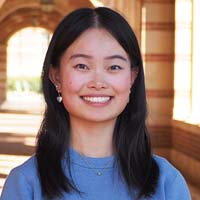
Flora Fan – Organic Chemistry – Doyle Group – Flora’s research focuses on leveraging reactive phosphorus radical intermediates with photoredox catalysis to develop new synthetic methodologies. She has also applied computational chemistry and data science tools towards catalyst development and understanding of reaction mechanism.
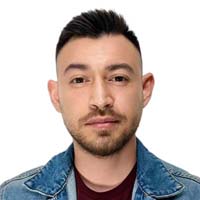
Jose Guardado – Physical Chemistry – Schwartz Group – Jose’s research focuses on understanding the reactivity, dynamics, and structure of hydrated electrons, excess electrons solvated in water that act as powerful reducing agents. Using high-level theoretical methods, he investigates how these species interact with water and other solvated molecules to uncover the fundamental mechanisms driving their chemistry. His work sheds light on the role of hydrated electrons in fields ranging from radiation chemistry to atmospheric and biochemical processes.
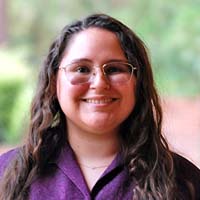
Macayla “Mac” Guerrero – Organic Chemistry – Gutierrez Group – Mac’s research focuses on expanding the application of iron as an effective catalyst for sustainable and selective carbon-carbon bond formation strategies under a mechanistic-driven approach. Through experimentation and DFT calculations, she studies the mechanistic details behind iron catalysis and how it can be leveraged for use as a competent cross-coupling catalyst. Her work is aimed at exploring new radical linchpin acceptors, such as nitrogenous alkenes, for use in stereoselective iron-catalyzed three-component radical cross-coupling reactions, and thus accessing a new chemical space of high-value nitrogen compounds.
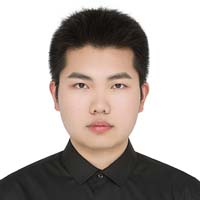
Wenyu Han – Chemical Biology – Tang Group – Wenyu’s research focuses on investigating fungal natural product biosynthesis and understanding how enzymes create structurally unusual small molecules. Through genome mining, heterologous expression, enzymology, and structural studies, he examines the biosynthesis of nitrogen–nitrogen bond-containing natural products, especially fungal hydrazides. His work centers on the discovery of new biosynthetic pathways and the mechanistic characterization of the enzymes that produce these compounds.
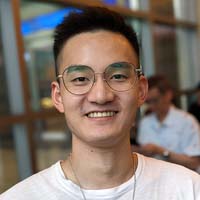
Jerry Hsu – Organic Chemistry – Harran Group – Jerry’s research introduces a novel, scalable approach to synthesizing modified analogs of EGCG, a natural flavonoid that disaggregates tau fibrils. Leveraging cryoEM structural insights, he synthesizes and conjugates EGCG analogs to a brain-penetrant peptide, Angiopep-2, through rigid diyne and cleavable linker. His work focuses on offering a path for therapies aimed at stopping AD-related cognitive decline and rescuing neuronal health.
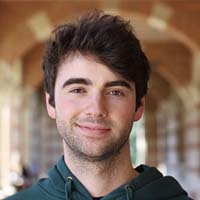
Nathan C. Incandela – Computational and Medicinal Chemistry – Houk and Conway Groups – Nathan is researching new strategies for targeting the parasite S. mansoni which causes Schistosomiasis, a neglected tropical disease. Using computations, he predicts new derivatives with improved potency against the parasite for synthesis and testing. In addition, Nathan utilizes quantum mechanics to characterize reaction mechanisms for pericyclic reactions, transition-metal catalyzed aldol additions and hydrogenations, and the reduction of viologen with formate.
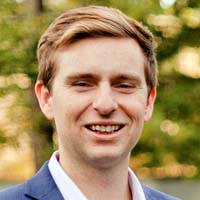
Bradley Kroes – Materials and Nanoscience – Kaner Group – Bradley’s research focuses on improving electrode materials for high-performance, energy-dense, rechargeable Li-ion, Na-ion, and Zn-ion batteries through the development of novel, rapid, and scalable materials syntheses. By nano-structuring electrode materials through mechanochemical processes, laser-scribing techniques, and incorporation of graphene coatings, Bradley demonstrates how electrode morphologies and conductivities influence battery longevity and fast-charging capabilities.
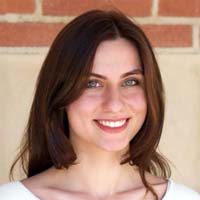
Lenka Milojević – Biophysics – Zhou Group – Lenka’s research focuses on the application of cryogenic electron tomography (cryo-ET) to investigate the structural organization of membrane-associated protein assemblies across diverse biological systems. She investigates viral and cellular structures and leverages three-dimensional structural information to generate mechanistic insights into dynamic biological processes.
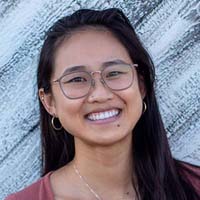
Christine Minor – BMSB – Clubb Group – Christine’s research focuses on cellulosome-producing bacteria from the rumen and human gut. Through the development of high-throughput biochemical screening approaches and computational pipelines, she has expanded the known diversity of cellulosome-producing microorganisms. Her current work aims to characterize cellulosome architecture and elucidate regulatory mechanisms that govern cellulosome production in these organisms.

Merin Rixen – BMSB – Loo and Quinlan Groups – Merin’s work employs label-free quantitative proteomics to characterize protein expression dynamics during female egg development. Individual egg chambers are analyzed across developmental stages to quantify changes in protein abundance and identify proteins exhibiting temporally regulated expression. The resulting proteomic atlas serves as a resource for future studies of oocyte biology.
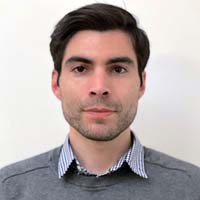
Noe Rodriguez – BMSB – Gelbart/Knobler Group – Noe’s research focuses on developing targeted virus-like particles (VLPs) for in vivo CAR T-cell immunotherapy, bypassing current methods involving patient-specific T-cell extraction and ex vivo T-cell manipulation. His methods include the following: (1) in vitro assembly of virus-like particles (VLPs), using purified plant virus capsid protein and in-vitro-transcribed CAR-encoding mRNA; (2) designing T-cell-targeting antibody fragments for C-terminal conjugation to VLPs; and (3) profiling expression patterns and quantifying cytotoxicity in CAR-transformed T cells.
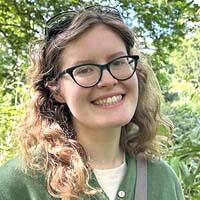
Lilith A. Schwartz – Chemical Biology – Kamariza Group -Lilith uses fluorescent trehalose probes and transcriptomics to study phenotypic heterogeneity and stress responses in mycobacterial dormancy. This work provides insights into mechanisms of probe labeling, trehalose metabolism, and cell wall remodeling. Lilith also works on developing rapid diagnostics for tuberculosis drug susceptibility testing.
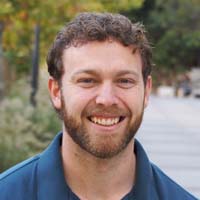
Jack Scully – BMSB – Schmitt Group – Jack develops genetically encoded fluorescent biosensors to illuminate cancer cell metabolism in real time and with high spatial resolution. By combining directed evolution techniques with fluorescence microscopy, he creates powerful imaging tools that reveal the metabolic dynamics of glutamine in cancer cells. Ultimately, Jack aims to share these tools with the scientific community to help advance our collective understanding of cellular metabolism.
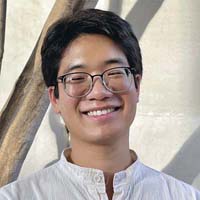
Pathorn “Henry” Teptarakulkarn – Biophysics – Shafaat Group – Henry’s research aims to understand how nature produces and uses hydrogen gas, focusing on enzymatic reactions driven by [NiFe]-hydrogenases. He studies a protein-based model of hydrogenase based on nickel-substituted rubredoxin that can be readily modified chemically or biochemically. By employing various characterization methods, he gathers detailed structural, functional, and dynamical data about the model at the molecular level. His primary goal is to systematically enhance the catalytic efficiency of the model to replicate that of the natural enzyme.
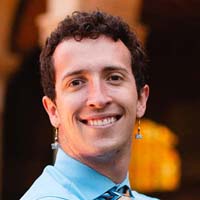
Daniel Turner – Organic Chemistry – Garg Group – Daniel’s research focuses on the generation and reactivity of fleeting, strained organic intermediates. His work centers on the discovery of new strained intermediates, improving methods to access key precursors, and applying these fleeting intermediates for the derivatization of peptides.
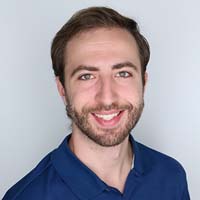
Thomas Underwood – BMSB – Wollman Group – Thomas develops tools to improve spatial transcriptomics by amplifying fluorescent signal. Traditional techniques rely on state-of-the-art microscopes to image dim spots that identify transcripts within complex tissues; brighter spots improve data quality and increase imaging speed. His work centers on a pipeline for designing, screening, and validating hybridization chain reaction variants.
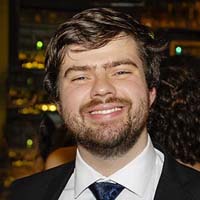
Zach Walters – Organic Chemistry – Garg Group – Zach’s research focuses on investigating fleeting geometrically distorted organic molecules. Through both computations and experiments, he studies both their generation and reactivity, exploring the wide range of interesting transformations that these highly reactive intermediates can undergo. Zach’s work has largely been focused on anti-Bredt olefins, a particularly notorious class of distorted alkene.
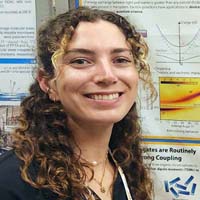
Alexandra Wright – Physical Chemistry – Caram Group – Lexi’s research focuses on enhanced light-matter interactions in molecular aggregates. By integrating these aggregates into Fabry-Pérot cavities or coupling them to plasmonic nanoparticles, they generate exciton-polaritons, which are hybrid quasiparticles with light-matter character. Her work aims to understand how J-aggregation influences polariton formation and to leverage these insights to achieve tunable, red-shifted absorption and photoluminescence extending into the short-wave infrared (SWIR).
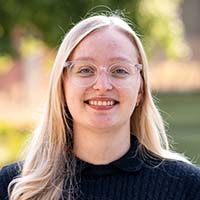
Lina Zarnitsa – Inorganic Chemistry – Nava Group – Lina’s work focuses on the synthesis of inorganic and organometallic complexes and understanding how their physical structure controls their reactivity. Inspired by heterogeneous chemistry and nature, the compounds are able to achieve room-temperature formation of binary materials and anhydrous rearrangement to trap fluoride ions. She is currently developing a transition metal platform inspired by zeolites.
Penny Jennings, UCLA Department of Chemistry & Biochemistry, penjen@g.ucla.edu.