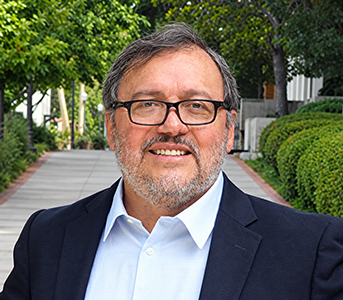
Professor Abigail Doyle and collaborators at the Scripps Research Institute and Sunthetics, an AI-for-chemistry company, have received a National Science Foundation award to support the development of an AI-enabled, remotely accessible laboratory that will serve as both a discovery engine and a training platform for the next generation of chemists. Doyle will lead efforts in data-rich experimental design and the discovery of new catalytic reactions using automation and open-source AI/ML tools.
From the Scripps Research Institute:
Scripps Research and collaborators awarded $19.5 million to establish an open-access autonomous chemistry laboratory
The U.S. National Science Foundation award will support development of an AI-enabled, remotely accessible lab to serve as both a discovery engine and training tool for a new generation of chemists.
August 26, 2026
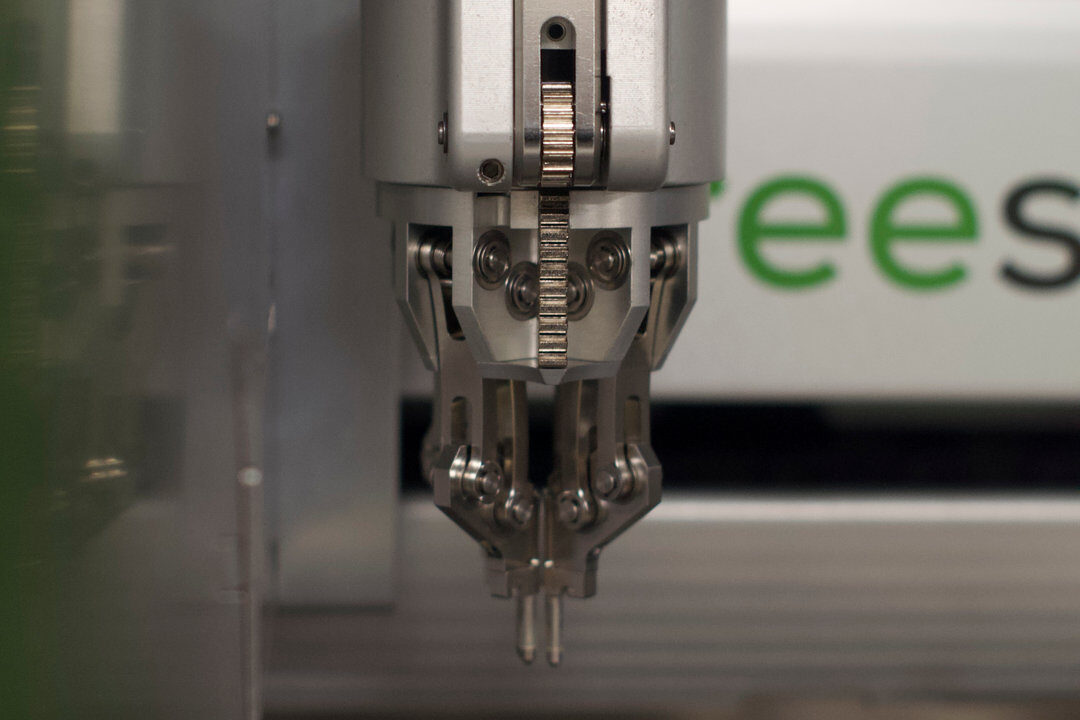
LA JOLLA, CA—Recent advances in robotics, automation and artificial intelligence (AI) have the potential to transform the process of scientific discovery. At Scripps Research, these technologies are applied to chemistry through the Automated Synthesis Facility, which provides robotic systems, analytical instrumentation and dedicated staff to elevate synthetic chemistry research within the institute and beyond.
Now, a new award from the U.S. National Science Foundation (NSF) totaling $19.5 million over four years will expand these capabilities by supporting a collaborative effort among Scripps Research, UCLA and Sunthetics (an AI-for-chemistry company) to establish a nationally accessible, fully automated chemistry laboratory. This “Chemistry Node”will be one of 20 AI-enabled NSF Test Bed: Toward a Network of Programmable Cloud Laboratory (NSF PCL)nodes across the United States, which will test, scale and demonstrate new methods and tools that advance automated science and engineering, driving discoveries across a wide range of fields. The NSF PCL initiative is led by the NSF Directorate for Technology, Innovation and Partnerships, NSF’s newest Directorate in more than 30 years.
“This award gives us an exciting opportunity to approach synthetic chemistry and its quirks as a data science problem, with the help of some of the field’s brightest minds here at Scripps,” says Brandon Orzolek, the lead principal investigator on the project and the scientific director of the Automated Synthesis Facility at Scripps Research. “The team unites experts in automation, data and computer science, synthetic chemistry, and AI to innovate how we produce, handle, store and share chemical information. With this support, we have a real shot at unearthing data-driven insights that strengthen our understanding of reproducible and transferable chemistry, something that may ultimately redefine the way we design new chemical reactions.”
The Chemistry Node, housed at Scripps Research’s Automated Synthesis Facility, aims to advance reaction discovery and optimization by translating researcher ideas into executable experiments, running them on robotic infrastructure, agentically analyzing the results with analytical instrumentation in real time, and then using AI to propose the next set of experiments.
One chemistry problem that the node will tackle is optimizing processes for creating specific organic small molecules, which are often used in medicines, agricultural chemicals and building blocks for new materials. Some of the most promising newer methods for making these molecules require multiple catalytic cycles—like a set of interconnected gears that must spin at well-matched rates to get from input to output. It can be cumbersome to figure out how changing one variable will affect each cycle and their ability to work together. Automation can help make the process of tweaking and assessing these variables, in order to streamline the overall reaction, much more efficient.
“Over the four-year award term, our node will progress through multiple phases, increasing accessibility to the broader community along the way,” says Orzolek. “By the fourth year, we should have a closed-loop system that can take an idea from a user anywhere in the world and turn it into an end product, expediting science that would otherwise take years to complete.”
In addition to being a discovery engine, the node will enhance education, the program leaders say. The node will provide hands-on learning for students from various institutions, including R2 universities (which have high research activity, but not as high as R1 universities), primarily undergraduate institutions (PUIs), and two-year colleges that may not otherwise have access to this type of advanced research infrastructure.
“From a training perspective, this provides a really unique opportunity to educate a new generation of chemists, who aren’t only at the bleeding edge of synthetic chemistry and catalysis, but also have AI and automation research built into their experience,” says co-principal investigator of the project Keary Engle, who’s also a professor and the John and Susan Diekman Dean of Graduate & Postdoctoral Studies at Scripps Research. “This will be an incubator to cultivate a new type of chemist that we think will drive the field forward in the future.”
Members of Engle’s lab will be among the first to propose experiments and test drive the program.
Orzolek is joined by several co-principal investigators. Engle will lead catalytic experimental design; Abigail Doyle, a professor at UCLA, will direct data-rich experimental design, quality control and academic tool integration; and Daniela Blanco, CEO of Sunthetics, will lead AI integration and web interface development.
“This new program offers a chance to address test cases that are challenging to optimize the old-fashioned way, manually, vial by vial,” says Engle. “We want the node to be so nimble and forward-thinking that it can map out a whole optimization workflow to the final useful data output. That output could be a synthetic method we can deploy to solve particular problems, like making a promising drug candidate or developing a new way to connect existing building blocks.”
For Orzolek, the project marks an important personal milestone.
“This award touches everything that I’ve ever been interested in throughout my training,” says Orzolek. “It addresses the need for reproducible and consistent data, it’s at the forefront of automation, machine learning and data science, and perhaps most importantly to me, broad access to this infrastructure will help educate a new class of automation-informed chemists from many different backgrounds.”
About Scripps Research
Scripps Research is an independent, nonprofit biomedical research institute ranked one of the most influential in the world for its impact on innovation by Nature Index. We are advancing human health through profound discoveries that address pressing medical concerns around the globe. Our drug discovery and development division, Calibr-Skaggs, works hand-in-hand with scientists across disciplines to bring new medicines to patients as quickly and efficiently as possible, while teams at Scripps Research Translational Institute harness genomics, digital medicine and cutting-edge informatics to understand individual health and render more effective healthcare. Scripps Research also trains the next generation of leading scientists at our Skaggs Graduate School, consistently named among the top 10 US programs for chemistry and biological sciences. Learn more at www.scripps.edu.